


The Work We Find
🌱 From Wonder Observation 0052
What a ninety-five-year-old printer can teach us about opportunity, becoming good at what we do, and learning to love the work we find.
A Wonder Essay from The Wonder Atlas
Learning to see, one wonder at a time.
A ninety-five-year-old man came into work one day and asked if he could speak with me.
I helped him with what he had come for, and afterwards I asked him a question.
“What did you do for a living?”
His face brightened.
He told me he had worked for a printing company for his entire working life.
He had started there when he was fifteen years old.
A messenger boy.
One day, someone at the printers asked him if he would like a permanent job.
He was told to go home and ask his father.
His father was a baker and happened to be at home when he arrived.
He laughed as he remembered telling him about the offer.
His father didn’t deliberate for long.
He told him to leave his dinner immediately and go straight back and accept the job.
So he did.
I loved that.
No long conversation about finding his passion.
No attempt to discover his calling.
There was an opportunity.
Take it.
And he did.
For the rest of his working life.
I asked him what the work had been like.
They printed almost everything apart from newspapers and magazines.
He told me how interesting the work had been. He might work on five or six completely different jobs for different customers in a single day.
Over the years, he learned many different printing skills.
Then I asked him the question that stayed with me.
“Did you enjoy it?”
His face lit up even more.
He loved it.

There was something strangely inspiring about hearing someone speak about their work like that.
We hear the opposite so often.
We complain about Mondays.
We count down to Fridays.
We joke about retirement.
We talk about difficult managers, annoying customers, stressful days and everything we would rather be doing.
And here was a ninety-five-year-old man looking back across an entire working life with affection.
He had loved his work.
It made me wonder:
How do we come to love what we do?
We are often told to find our passion.
Young people are asked remarkably early what they want to do with their lives.
Find your passion.
Discover your calling.
Work out what you were born to do.
Then pursue it.
It sounds wonderful.
I’m just not sure life always works like that.
Our interests may not simply be sitting somewhere inside us, fully formed, waiting to be discovered.
Interests can grow.
We spend time doing something.
We learn.
We improve.
Something that was once difficult becomes easier.
What felt unfamiliar becomes familiar.
And somewhere along the way, we may discover that we rather enjoy it.
At fifteen, he couldn’t possibly have known how he would feel about printing at ninety-five.
He had an opportunity.
He took it.
And then he learned.

I recognise something of this in my own working life.
I’ve enjoyed work most when I’ve become good at it.
Experience brings skill.
Skill brings confidence.
And confidence changes the experience of work.
You relax.
You’re less anxious about what might go wrong.
You learn how to handle difficult situations and understand people better.
Eventually you have enough capacity not simply to do the work, but to think about how the work itself could be done better.
I find deep satisfaction in doing a job really well.
Good organisation.
Clear information.
Smooth systems.
People knowing what they are doing.
A team helping one another.
And, importantly, people having a laugh.
Efficiency sometimes gets a bad name. We can imagine it as squeezing more productivity out of people.
But good systems can do almost the opposite.
Chaos makes people stressed.
Poor organisation makes people harassed.
Good systems create space.
Space to relax.
Space to notice people.
Space to do the job properly.
Space even to laugh.
Becoming good at our work doesn’t merely make us better workers.
It can help us enjoy being at work.
There is something deeply satisfying about doing something well.
You can see it in people whose work might never appear on a list of dream careers.
I have watched baristas make coffee who are brilliant at what they do.
They know people’s names.
They remember what they order.
They talk while they work.
They create warmth around a counter.
And they make an excellent cup of coffee.

There is something beautiful about watching someone give themselves to an ordinary task and do it extraordinarily well.
Meaningful work isn’t necessarily hiding somewhere else.
Some of its meaning can grow through the way we inhabit the work already in front of us.
That doesn’t mean we should stay forever in work that is wrong for us.
Sometimes we need to leave.
Sometimes an experience teaches us precisely that.
I’ve come to prefer the phrase:
trial and learning.
Try something.
Give it your best.
Learn everything you can.
Become as good at it as you can.
And pay attention.
What do you enjoy?
What are you good at?
What drains you?
What makes you come alive?
What have you learned about yourself that you couldn’t possibly have learned by thinking about it?
And if you discover that this isn’t where you belong, take what you’ve learned with you.
Then try again.
Finding work we enjoy may require less pressure to know in advance and more willingness to learn through experience.
But there is another perspective I find difficult to forget.
I have spent time in Haiti.
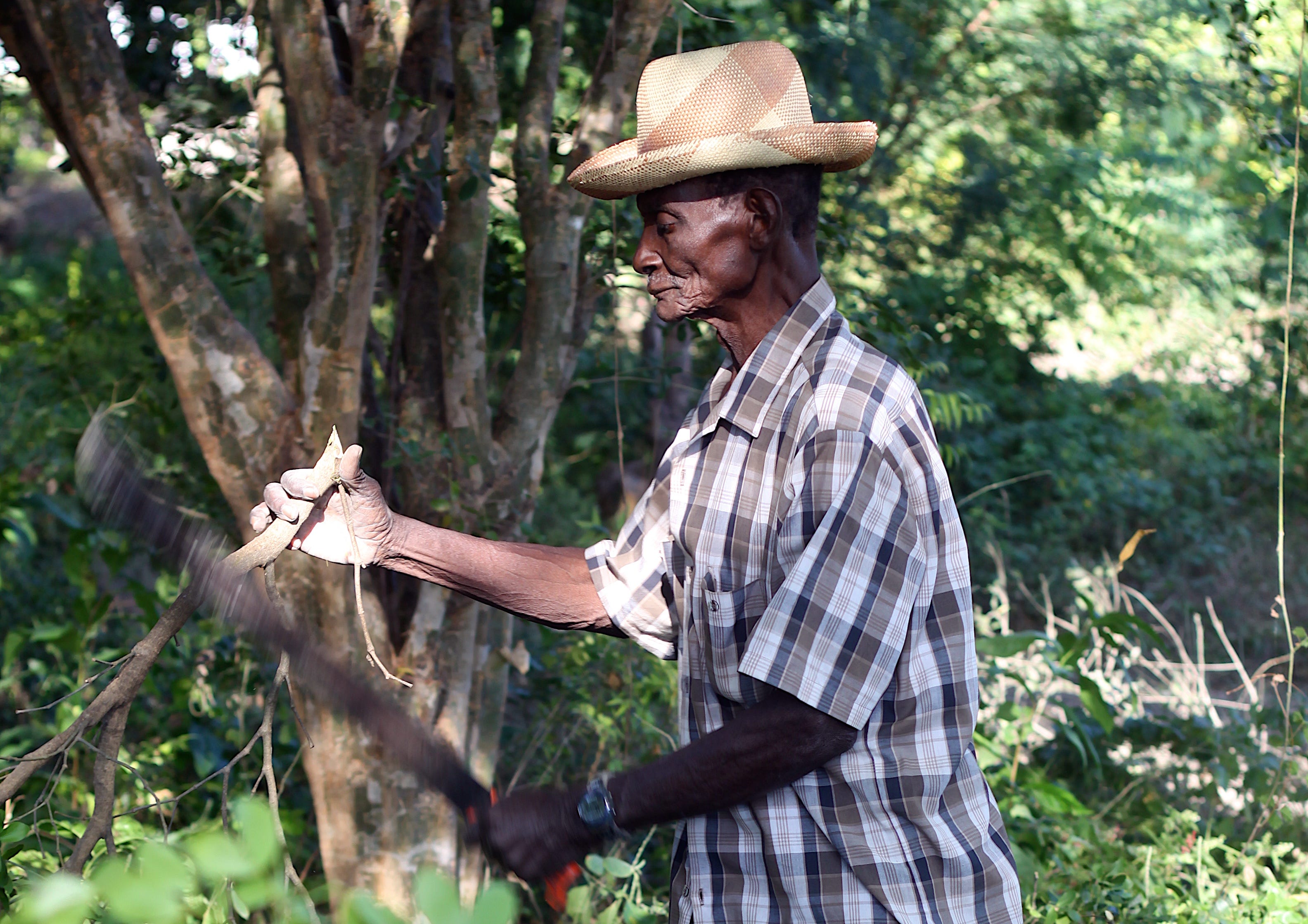
I met young men there whose frustration wasn’t that they hadn’t discovered their passion.
They couldn’t find work.
I remember one man telling me he would receive two dollars for a full day’s work breaking one large rock into smaller rocks with a sledgehammer.
He told me it hurt his joints and bones.
For many of the people I met, having work meant being able to put food on the table.
It changes the perspective.
There are places in the world where the question is not:
How do I find work I love?
It is:
How do I find work?
That doesn’t mean we should romanticise poverty.
Nor should gratitude ever be used to justify dangerous conditions, exploitation or inadequate pay.
And someone else’s suffering shouldn’t be used to make us feel guilty for finding our own work difficult.
But perspective can remind us that an opportunity to work is itself something we can receive with gratitude.
We can hold two things together.
Gratitude and growth.
I can be grateful for the work I have today while still hoping for something different tomorrow.
I can appreciate the income that provides for my family while developing new skills.
I can give myself fully to today’s opportunity without pretending it must be my final destination.
Gratitude doesn’t require us to stop growing.
It gives us somewhere good from which to begin.
Which brings me back to the pressure of calling.
I’m increasingly unsure whether asking people to discover their calling is always as helpful as we imagine.
It can make life sound like a puzzle.
Somewhere out there is the one thing you were created to do.
Find it.
Don’t miss it.
Choose correctly.
That’s an enormous weight to place on an eighteen-year-old.
My understanding of Christian calling has become both larger and simpler.
Jesus was once asked which commandment mattered most.
Love God.
Love your neighbour.
I don’t think we need to make it much more complicated than that.
Our work becomes one of the places where we get to live it.
The person we serve.
The colleague beside us.
The young employee we’re training.
The difficult customer.
The person who needs encouragement.
The next person who comes through the door.
Work gives us people to love.
And excellence can itself become part of that love.
Doing something well matters because somebody receives what we have made, repaired, taught, organised, cleaned, delivered, prepared or served.

Excellent work can bless another person.
Passion, then, isn’t quite the word I’m looking for.
There is something quieter.
Contentment.
Not perpetual excitement.
Not waking every morning desperate to get to work.
Not pretending there aren’t difficult days, repetitive tasks, frustrations or people who test our patience.
Something deeper.
To become good at something.
To enjoy doing it well.
To know that what we do contributes something.
To work alongside people we enjoy.
To help make the place better because we are there.
To serve people well.
And to be grateful for the opportunity.
That feels like quite a lot.
I keep thinking about that fifteen-year-old messenger boy.
He came home with an opportunity.
His father was a baker.
His dinner was sitting in front of him.
And his father told him to leave it.
Go back.
Take the job.
So he did.
Eighty years later, I happened to ask him about it.
And his face lit up.

Maybe we don’t always find work we love.
Sometimes, somewhere between opportunity and experience, learning and mastery, service and gratitude, we learn to love the work we find.
I wonder how many of us will go to work tomorrow without thinking very much about it.
The same journey.
The same building.
The same people.
The same tasks waiting for us.
But somewhere inside all that ordinary work may be something worth noticing.
Something we have become remarkably good at.
Someone whose day is better because we are there.
An opportunity we once hoped for and have slowly stopped noticing.
Or simply one small part of the job that, if someone asked us about it eighty years from now, might still make us smile.
Continue the Wonder
Every Wonder Essay begins with a simple observation.
Some readers are content simply to pause and wonder.
Others want to keep exploring.
If you’d like to follow this observation further, I’ve created a Research Companion exploring the psychology of interest, meaningful work, competence, calling, decent work and the further questions that grew from this Wonder Seed.
Continue exploring → Research Companion
What a brilliant perspective on work Aaron, I just shared this with my children who are 15 yrs old twins, as you know, and thinking about there future as they go into 4th year. Your article comes at a good time for them, thank you for this bro.