

Sweetness and Light
🌱 From Wonder Observation 0050
A morning walk through a park, a gift from another generation, and a quiet question about what might already be in our hands to give.
A Wonder Essay from The Wonder Atlas
Learning to see, one wonder at a time.
I deliberately park further away from work than I need to.
There are easier places to leave the car.
But they would take me through streets, past buildings and supermarkets.
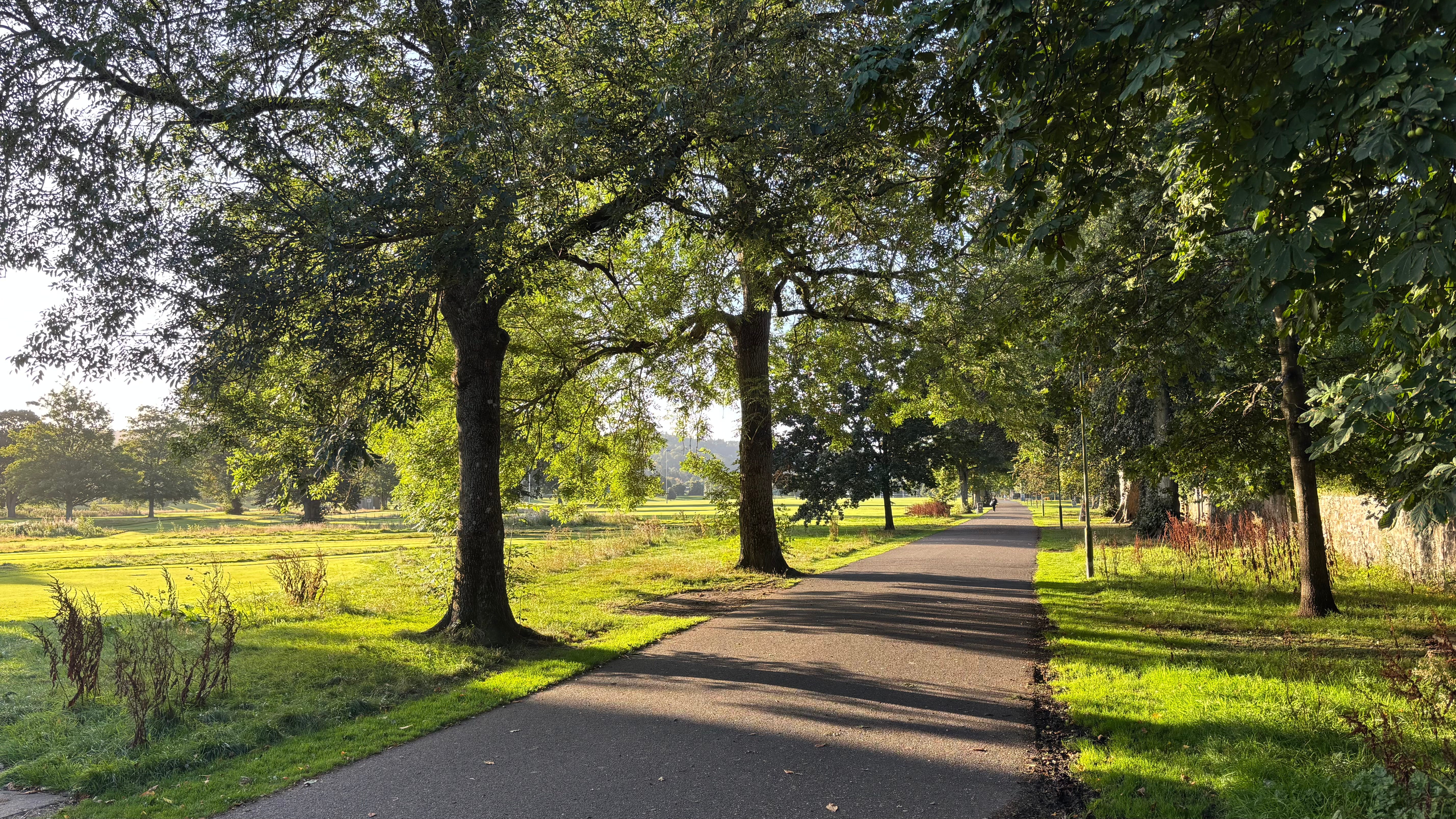
This way takes me through North Inch Park.
Most mornings, that feels like the better choice.
One warm July morning, it was especially easy to see why.
The grass was intensely green.
The sky was blue.
Wildflowers were scattered through the park.
Large trees stood across the open ground, and birdsong seemed to come from everywhere.
People were already moving through the morning.
Some were running.
Some were walking dogs.
Some were exercising.
Couples walked together talking.
Others were simply crossing the park on their way to work.
We were all using the same piece of land differently.
And none of us had bought a ticket.
I had already been driving for forty minutes.
Ahead of me was a busy day in the pharmacy.
Noise.
Concentration.
Questions.
Decisions.
Interruptions.
Most of my working day would be spent inside a dispensary without a direct view outdoors.
But between the car and all of that, I had a park.
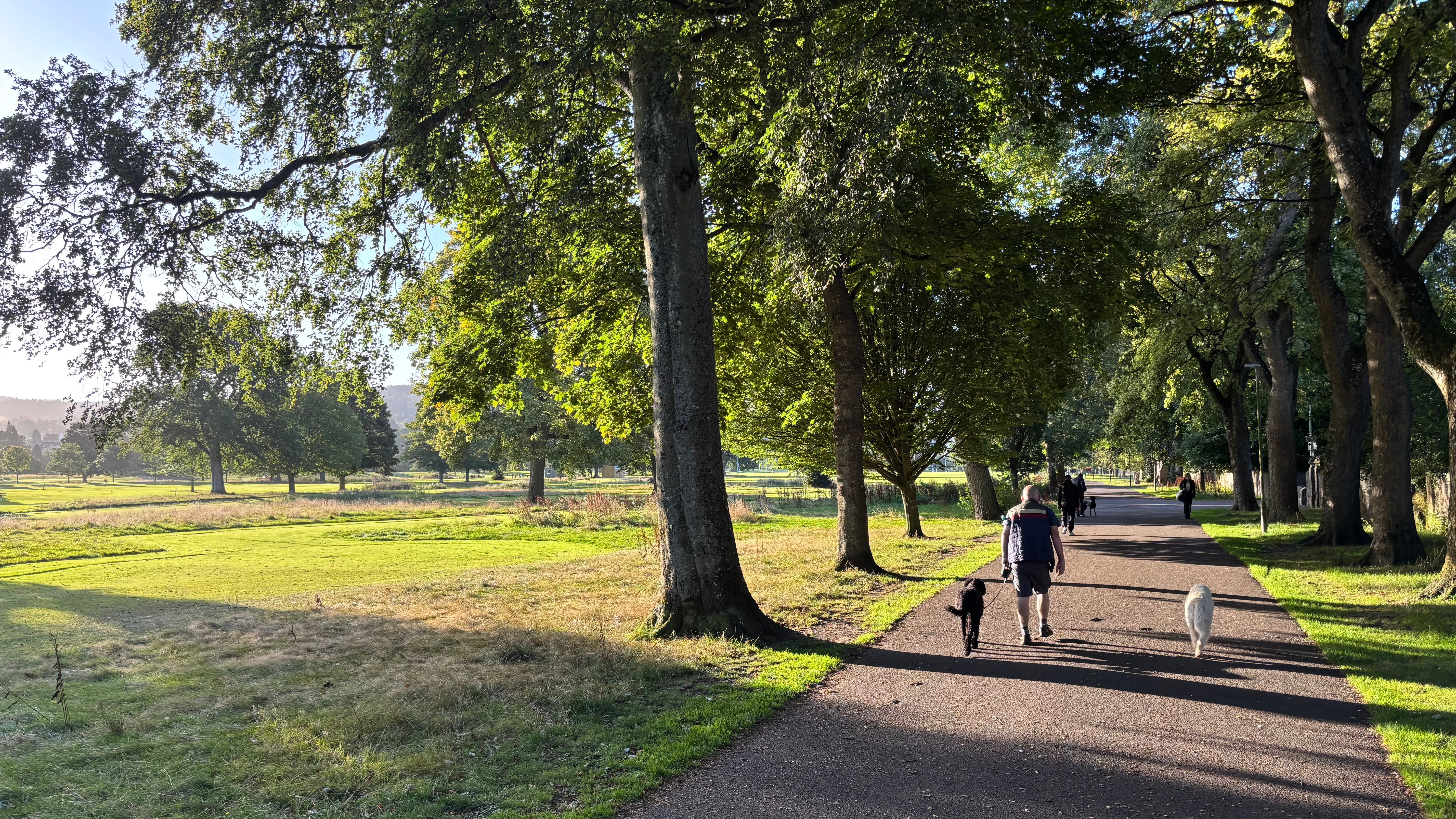
Fifteen minutes of grass and trees.
Birdsong.
Open sky.
Space.
That morning walk helps calibrate me for the day ahead.
I like that word.
To calibrate something is to bring it back into alignment.
Those fifteen minutes seem to do something like that for me.
They slow my pace.
Clear some of the noise.
Help me arrive at work a little more settled.
That morning, as I crossed the park, I found myself thinking:
What an incredible gift parks are.
And almost immediately I thought about another one.
Pittencrieff Park.
The Glen.
Home.
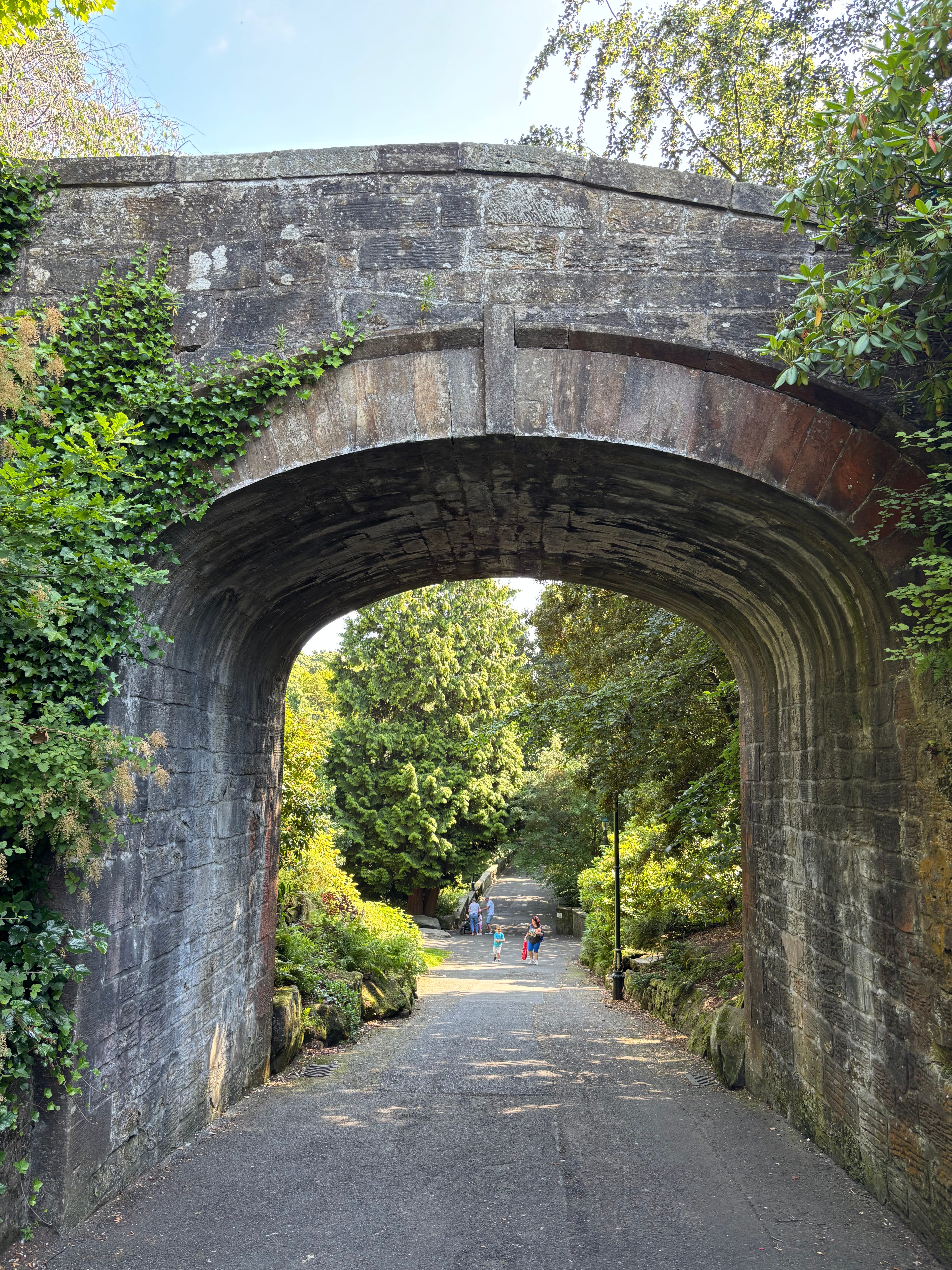
I was born in Dunfermline and grew up beside it.
As a child, I never thought of Pittencrieff as a gift.
It was simply there.
There was a little cycle track where we could hire tricycles and ride around miniature roads with tiny traffic lights.
To a child, it was brilliant.
I played football there.
Rode my bike.
Skateboarded.
Collected conkers.
Climbed on the old steam locomotive.
I remember the blossom trees.
I remember going to the fireworks with my mum and dad.
And the park did not disappear from my life when childhood ended.
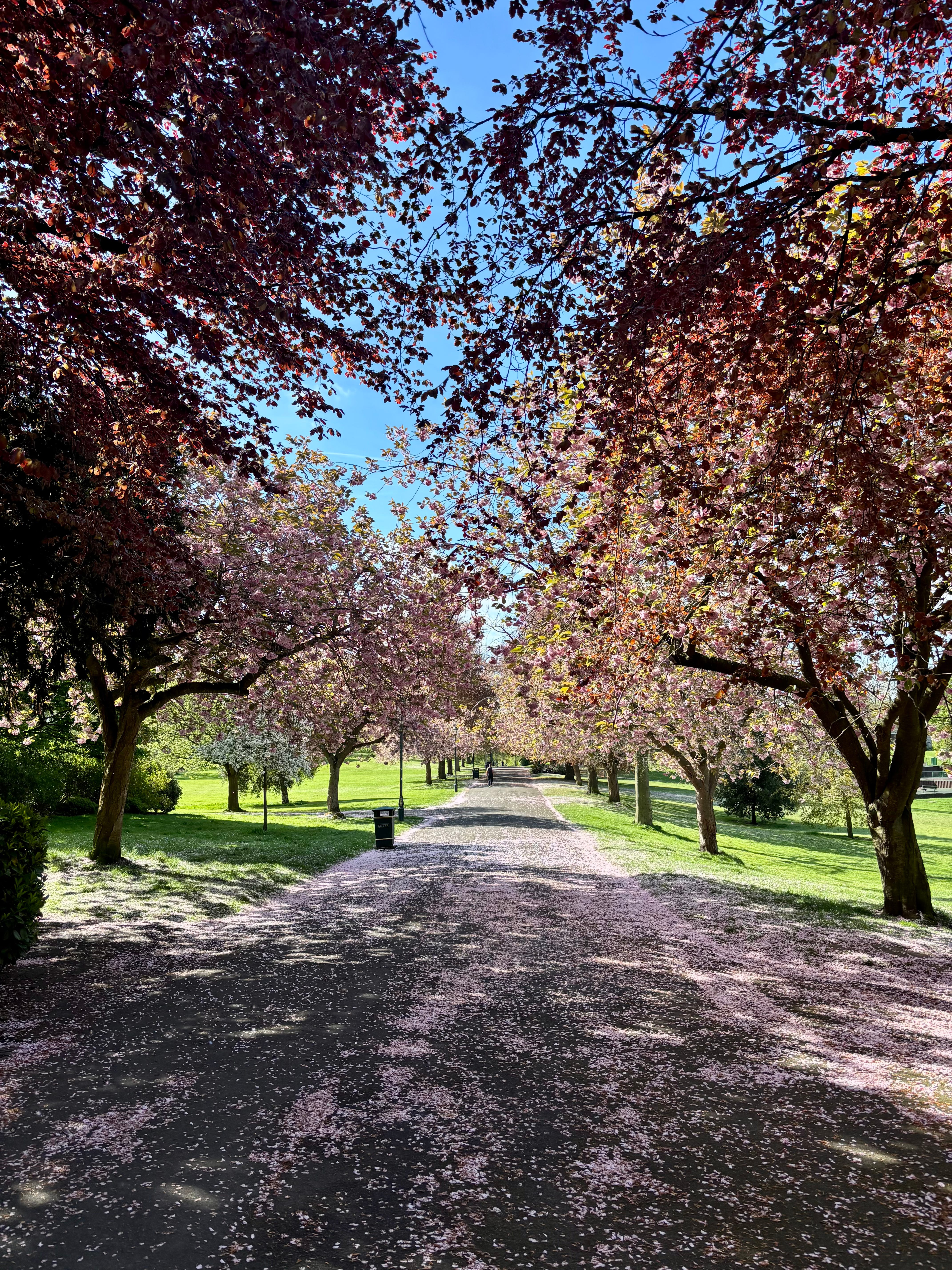
Years later, I walked hand in hand with Lynsey beneath those blossom trees.
We returned with children of our own.
I pushed them on the swings.
Watched them run with delight through the children’s park.
And returned to those same fireworks, this time carrying my own children on my shoulders.
The park moved quietly through different seasons of my life.
At the time, I hardly thought about why it was there.
Children seldom ask who gave them the field they are playing in.
They just play.
Only much later did I understand that I had been receiving something.
Long before I was born, Andrew Carnegie had grown up in Dunfermline too.
Pittencrieff had been bound closely to his childhood. The estate was privately owned, and because of a dispute involving his mother’s Morrison family, Carnegie himself was excluded from it.
The boy who once looked towards that private place later became wealthy enough to buy it.
And the estate was opened for the people of Dunfermline to enjoy.
Carnegie would later describe Pittencrieff as his “most soul-satisfying public gift.”
That amazed me.
But another phrase moved me even more.
Carnegie wanted his work in Dunfermline to bring more “sweetness and light” into the lives of ordinary people, especially the generations of children who would come after him.
When I discovered those words, I stopped.
Because suddenly I realised something I had never really considered before.
I was one of those children.
The football.
The bikes.
The tricycles.
The blossom trees.
The fireworks.
All those ordinary childhood experiences had been part of the sweetness and light Carnegie had hoped his gift might bring into lives he would never see.
And the gift had kept travelling.
Into adulthood.
Into my marriage.
Into the childhood of my own children.
Carnegie died long before I was born.
He never knew my name.
He never saw me kick a football across that grass.
He never saw me riding my bike.
He never saw the fireworks reflected in the eyes of a boy standing with his parents.
He never saw that little boy grow up, walk beneath the blossom trees with his wife, or return carrying children of his own.
Yet I received the gift.
Something that had once existed in the imagination of a man I would never meet became part of the landscape of my life.
His generosity entered my life so quietly that, for years, I did not even recognise it as generosity.
I simply called it the park.
How much of what we experience as ordinary arrives this way?
Someone plants a tree beneath which another person will someday sit.
Someone builds a path they may never walk again.
Someone maintains a garden for people whose names they will never know.
Someone teaches.
Someone gives.
Someone preserves.
Someone opens a door.
And years later another person walks through it, scarcely aware of everything that made the moment possible.
I began wondering how much of my own life had arrived as a gift.
And how much I had received without ever knowing the giver.
There was something humbling about that.
It also made me think differently about generosity.
I had always imagined generosity mostly as something that moved from one person to another.
Someone gives.
Someone receives.
But sometimes it travels much further than that.
A gift can outlive the giver.
A tree keeps growing.
A park remains open.
A child receives something that began decades before they arrived.
And sometimes, later, the person who received generosity finds themselves wanting to give something away too.
Not because kindness reproduces itself automatically.
Human beings are far more complicated than that.
But receiving goodness can enlarge our imagination for what goodness might look like.
That thought took me back to ancient words in Genesis.
In the story of Abraham, blessing was never meant to stop with the person receiving it.
Abraham is blessed so that he might become a blessing.
I have always loved that movement.
Receiving.
Then giving.
And Jesus’ Parable of the Talents added something else.
In the story, the servants were entrusted with different amounts.
The important thing was not that they had all received the same.
They hadn’t.
The question was what they did with what had been entrusted to them.
That made the parable feel newly relevant.
I do not have Andrew Carnegie’s wealth.
Most of us don’t.
But all of us have things entrusted to us.
Time.
Abilities.
Resources.
Opportunities.
Influence.
Attention.
Different people receive different things in different seasons of life.
Stewardship is not about comparing what is in my hands with what is in somebody else’s.
It asks what I will do with what has actually been entrusted to me.
And that, for me, connects deeply with what it means to love my neighbour.
Love is not only something I feel.
It can become something another person receives.
Something in my hands can become sweetness and light in somebody else’s life.
That can sound very grand when the story involves Andrew Carnegie.
Most of us will never have the resources to give a town a park.
I certainly won’t.
Later that same day, something much smaller happened.
It was hot at the pharmacy.
I had bought ice creams for the staff, and one white-chocolate Magnum was left upstairs in the freezer.
A delivery driver arrived near the end of what had clearly been a long day.
His van had no air conditioning.
He looked hot.
Tired.
Bothered.
I asked him if he wanted an ice cream.
He thought I was joking.
I told him there was a Magnum upstairs and that he should go and get it.
When he came back downstairs, his face had changed.
He smiled.
“That is the kindest thing anyone has ever done for me.”
I suspected he was exaggerating.
It was an ice cream.
The next morning he came back.
The first thing he said was:
“I dreamt about that ice lolly last night.”
I laughed.
I still do not know whether he actually dreamed about it.
It doesn’t really matter.
What mattered was that he remembered.
And somewhere between Pittencrieff Park and a white-chocolate Magnum, something became clearer.
The size of the gift and the meaning of the gift are not necessarily the same size.
One was an estate.
One came from a freezer.
They are ridiculous things to compare.
Yet the same question sat quietly beneath both.
What might something already in my hands become in somebody else’s life?
Kindness is often more ordinary than we imagine.
It begins with noticing.
Someone is tired.
Someone needs encouragement.
Someone could use help.
Someone would appreciate being remembered.
Someone is standing right in front of us, carrying a day we know almost nothing about.
And sometimes there is something already within reach that could make someone’s day a little lighter.
A conversation.
A meal.
A lift home.
A word of encouragement.
Time.
Attention.
A skill.
A door held open.
An ice cream on a hot afternoon.
Most of these things will never carry our name.
Nobody will build a statue because of them.
Most will disappear almost as soon as they are given.
That does not make them insignificant.
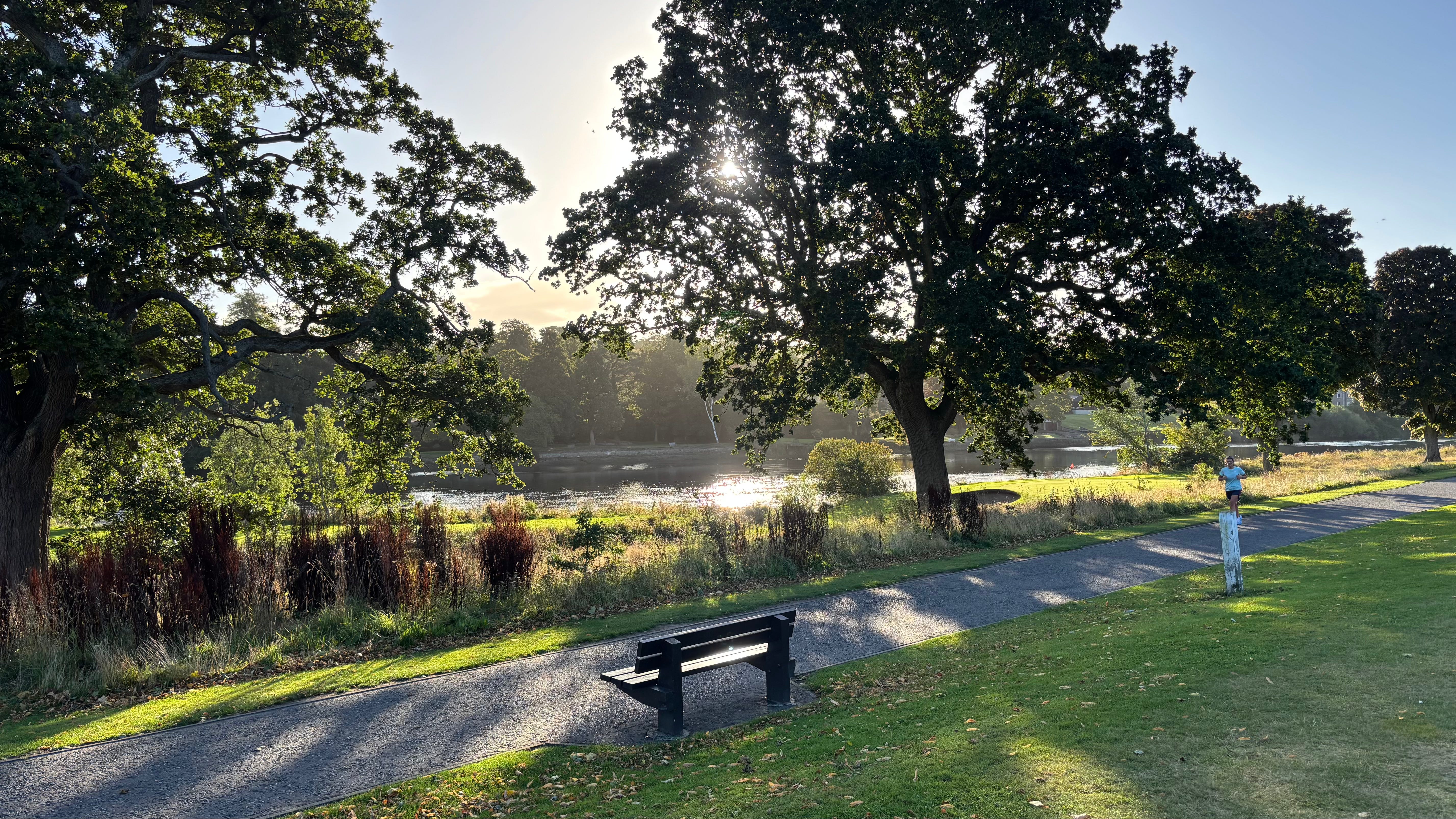
I still walk through North Inch Park before work.
People run.
Dogs chase balls.
Couples talk.
Someone sits quietly beneath a tree.
Most of us give very little thought to all the people and decisions that allow the park to remain there.
We simply enter.
We receive.
And then we continue with our day.
But I walk through parks differently now.
They remind me that I am surrounded by things I did not create.
Things prepared before I arrived.
Things preserved by people I may never meet.
Things entrusted to one generation and quietly handed to another.
And now I carry one question out of the park with me.
Not:
What great thing could I give?
Something much smaller.
What is already in my hands?
And who might be standing close enough to receive it?
Most of us will never give away a park.
But all of us move through ordinary days carrying something.
And I wonder how often sweetness and light begins to travel
in the moment we notice another person
and choose to put love into practice
with whatever is already in our hands.
“The size of the gift and the meaning of the gift are not necessarily the same size.”
Continue the Wonder
Every Wonder Essay begins with a simple observation.
Some readers are content simply to pause and wonder.
Others want to keep exploring.
If you’d like to follow this observation further, I’ve created a Research Companion exploring the questions beneath Sweetness and Light — what Carnegie meant by “sweetness and light,” what parks give us, how a gift can keep travelling after the giver is gone, whether generosity can help create more generosity, and why something so small can sometimes mean so much.
Continue exploring → Research Companion
I’ve also gathered a Sweetness and Light Photo Journal — a slower visual journey through North Inch, Pittencrieff Park and Haiti, following the places, seasons, people and acts of care that shaped this story.
Continue looking → Photo Journal
A note on process: This essay grew from a real lived observation and experience, recorded through the Wonder Atlas process. It was then developed in collaboration with ChatGPT through an iterative process of questions, responses, reflection, drafting and editing. I contributed the originating experience, photographs and reflections, answered questions throughout the process, shaped and reviewed the developing essay, and approved the final published text. I take responsibility for the final work.