


A Day at the Art Gallery
🌱 From Wonder Observation 0065
A day in Edinburgh, the unexpected pleasure of taking time to really look at art, and a question about what else we might enjoy if we gave something new a chance.
A Wonder Essay by Aaron Dowds
A few days before I went to Edinburgh, I had been reading Helen Keller.
I had just finished writing I Could See, which grew from her essay Three Days to See. Keller imagines what she would do if she were suddenly given sight for only three days. She wants to see the people she loves. Trees. Flowers. The changing light. And she wants to visit museums and art galleries.
That part really stood out to me. Keller was blind, yet she had visited museums and experienced works of art through touch.
I had been in museums and galleries before too, but I could not remember an art gallery having much impact on me. If anything, I had probably rushed through them without giving myself enough time to appreciate or enjoy the experience.
Yet here was Helen Keller longing to see paintings that were freely available to me.
I could see.
And I had hardly taken the time to look.
I knew I had a day off approaching. Lynsey would be working, and the children would be at school or university. I started thinking about what I might do with the day.
I could easily have gone hiking with Mambo. I love the outdoors. A day in the hills would have felt much more naturally like me.
Instead, I decided to go to Edinburgh.
Helen Keller’s words were still fresh in my mind, and they tipped the balance towards Edinburgh.
The plan was simple.
A good coffee.
An art gallery.
A museum.
After dropping the children at school, I drove to the Park and Ride at Ingliston and took the tram into the city.
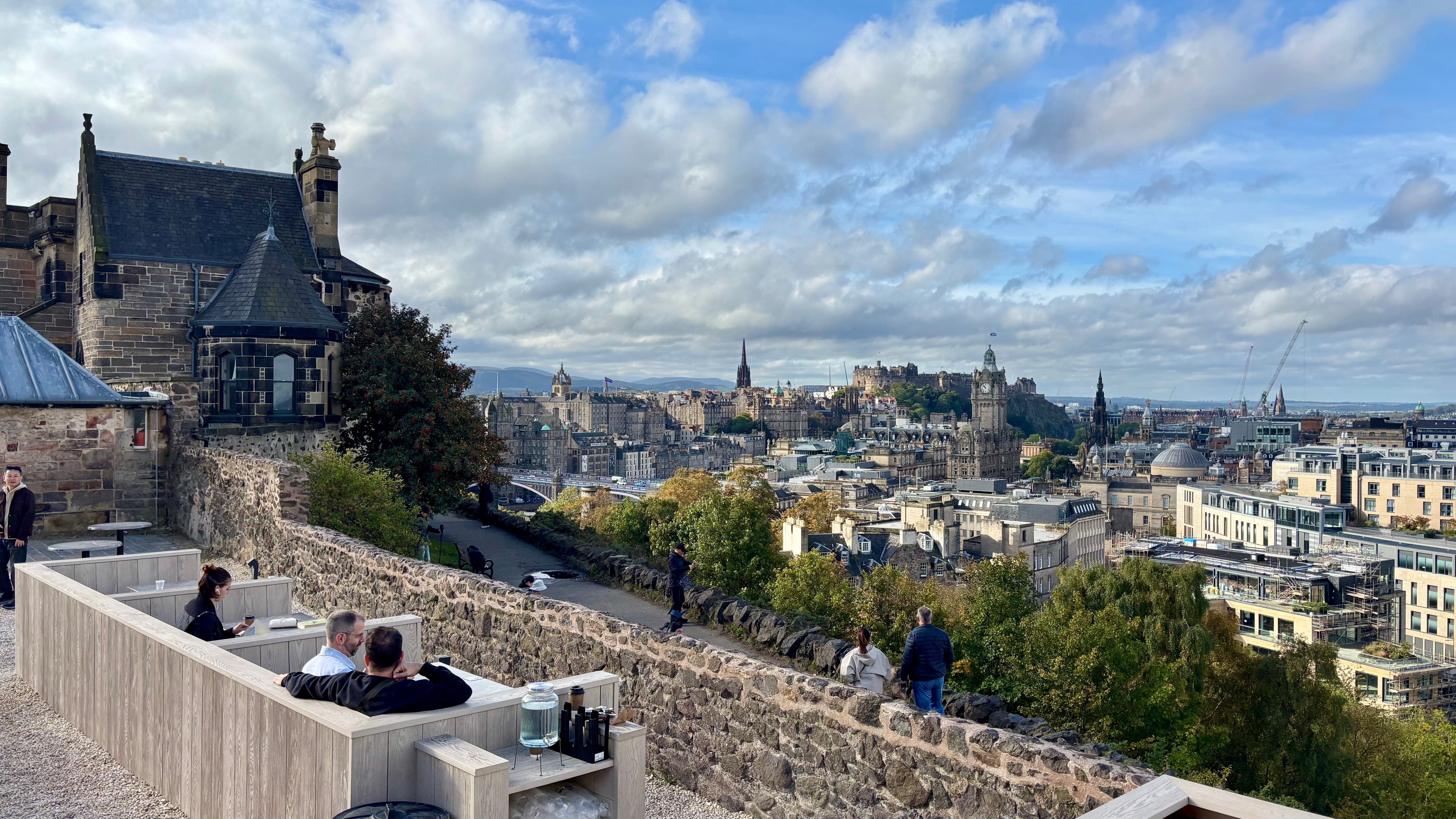
My first stop was Calton Hill. I had heard there was a café with wonderful views across Edinburgh.
It was a beautiful morning. I wandered among the monuments taking photographs — the National Monument, Nelson Monument, the Old Royal High School, the City Observatory — and looking out across the skyline.
There were tourists everywhere. People had travelled from all over the world to enjoy and explore a city that sits almost on my doorstep.
That struck me too.
Sometimes the things closest to us become so familiar that we stop noticing and appreciating them.
So much history, architecture and beauty on one hill.
My morning had hardly begun, and already I felt richly rewarded.
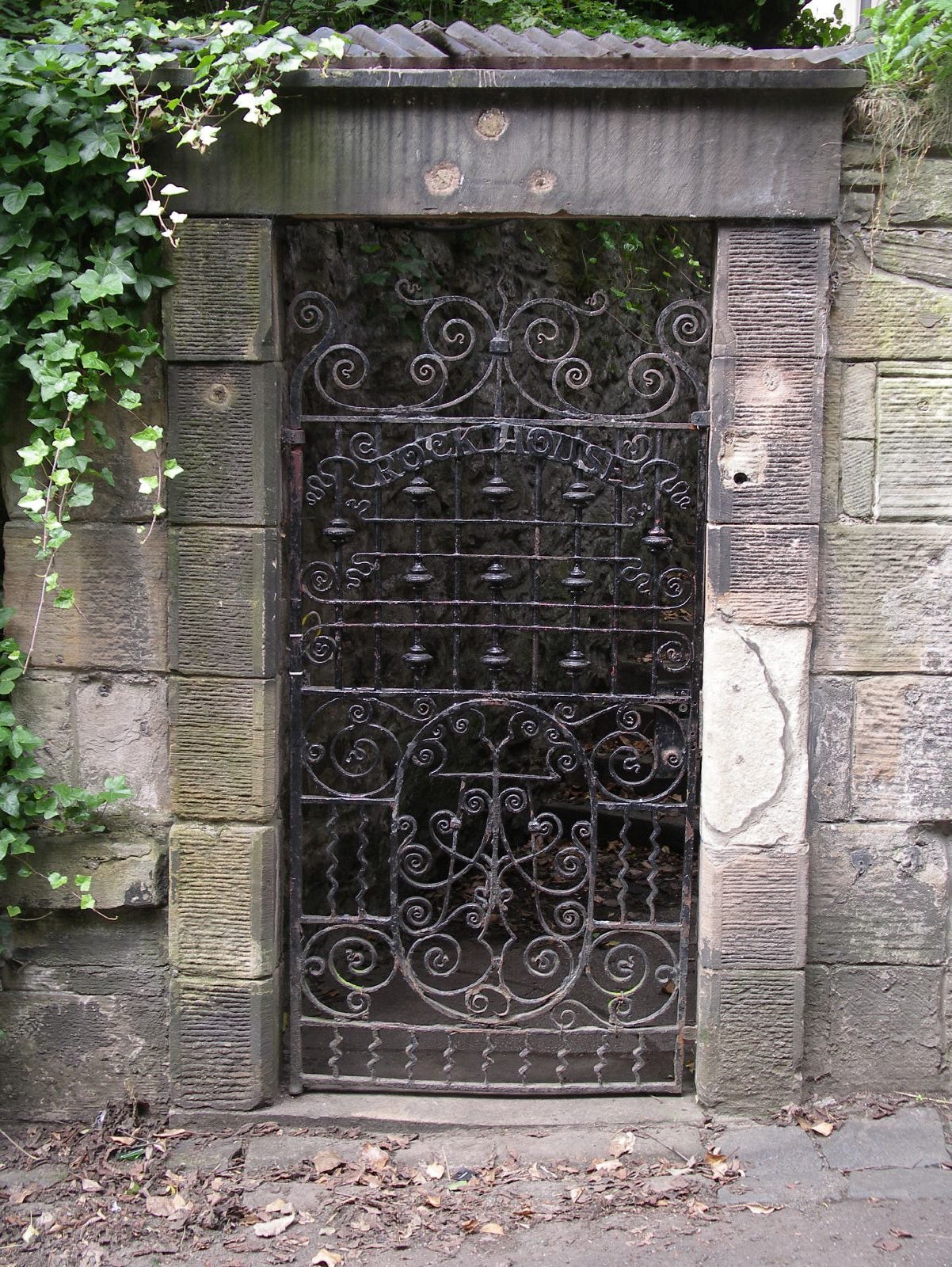
Walking up Calton Hill, I passed a black iron gate.
The words ROCK HOUSE were worked into it. The gate was closed, but I stopped and looked through, wondering what was beyond.
I had no idea what Rock House was.
So I carried on up the hill.
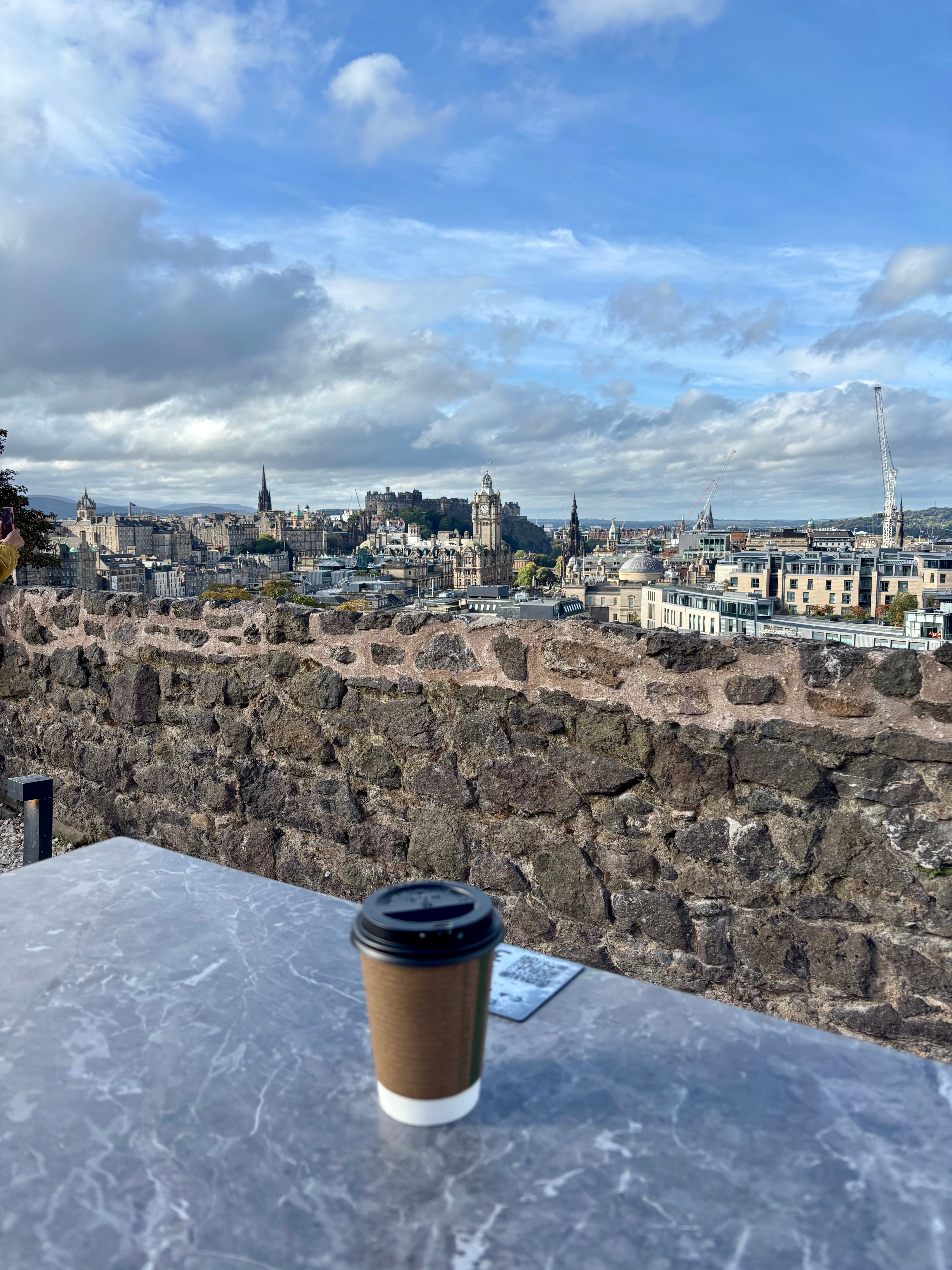
I found the café on Calton Hill and sat outside for a while, looking across Edinburgh towards the castle.
Eventually I made my way towards the National Gallery.
By then I had already made a decision.
I was going to take my time.
Helen Keller had written not only about wanting to see art, but about learning how to look. She had spoken with artists about composition, line, form and colour. She had even imagined a university course on how to use our eyes.
That idea caught my imagination.
What if looking was something that could be learned?
So I decided to slow down and see if I could learn to really look at art.
I was going to linger.
I was going to pay attention.
Just inside the entrance, in the gift shop, I saw a reproduction of The Monarch of the Glen.
Wow.
That looks incredible, I remember thinking.
I really wanted to find the original.
Then I began in the Scottish galleries.
Very early on, a painting by David Octavius Hill stopped me.
Edinburgh Old and New.
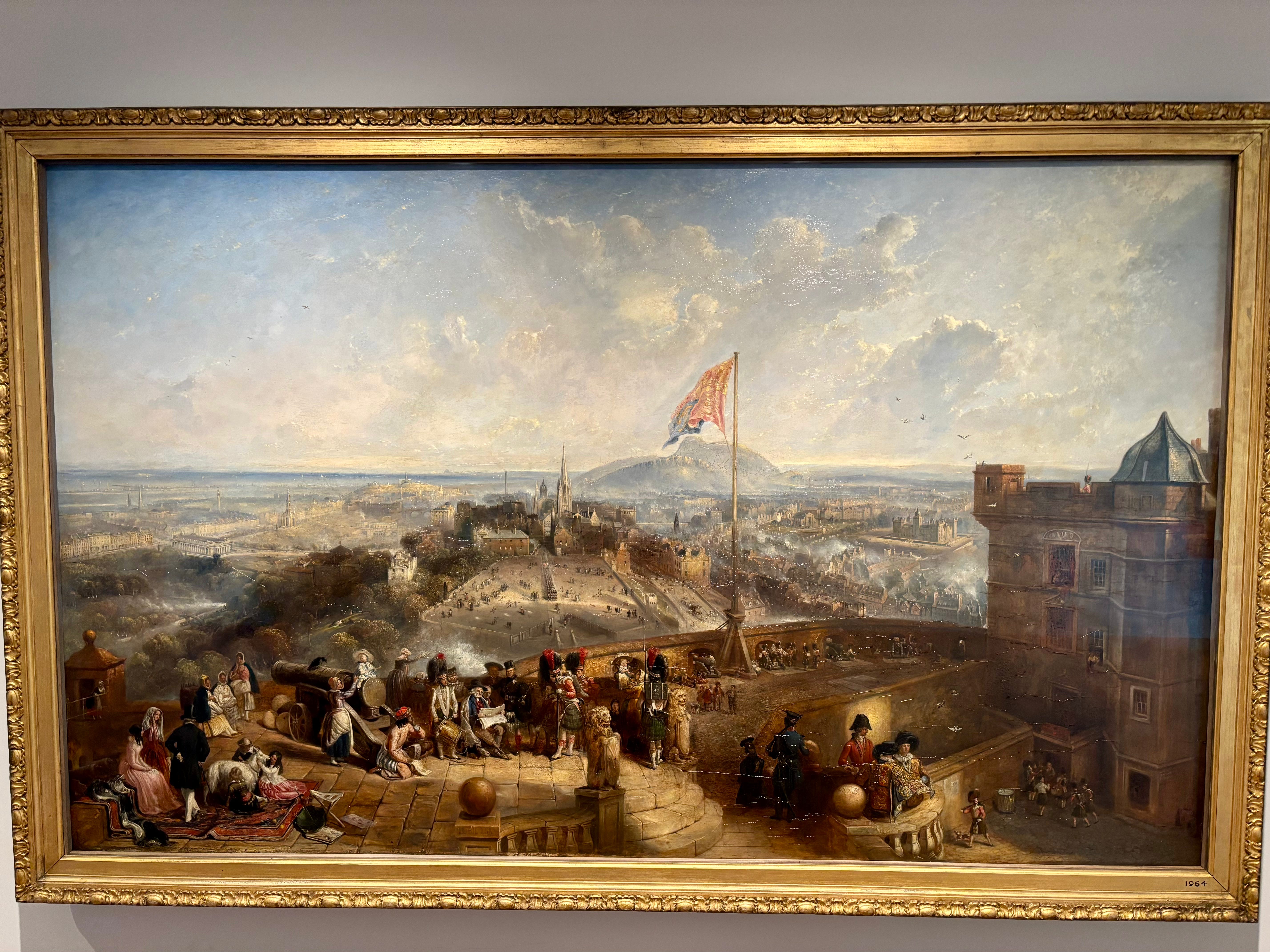
I stood back and looked at the whole painting.
Then I read the information beside it.
Then I moved closer.
What amazed me was the detail.
Buildings. Sky. Streets. Tiny people.
From a distance those people seemed completely convincing. When I moved close, some of them appeared to be little more than a few marks of paint.
Then I stepped back.
And the people appeared again.
I found that fascinating.
So I began doing the same thing with other paintings.
Look at the whole thing.
Read.
Move closer.
Look at the detail.
Stand back again.
I felt calm.
Unhurried.
Curious.
The Gallery was fairly busy, but I became less aware of everyone moving around me. I was interested in the paintings and in how they had been made.
How did somebody do this?
How long did it take?
How had they learned to see enough detail to reproduce it like that?
And the strange thing was that I was enjoying myself almost immediately.
I did not have to work for three hours until art eventually became interesting.
The first few paintings had already drawn me in.
Later, when I researched Hill, I discovered something I could never have known while I was standing in front of that first painting.
Hill was not only a painter. He became one of the pioneers of early photography in Scotland through his partnership with Robert Adamson, and photography was involved in the making of Edinburgh Old and New. Their photographic work was centred at Rock House on Calton Hill.
Rock House.
The gate I had stopped at that morning.
I had looked through it and walked on without knowing what I was looking at.
A few hours later, the first painting that really held my attention was by the man who had worked there.
I love photography.
Yet that morning I had walked straight past the place at the centre of Hill and Adamson’s pioneering photographic work without knowing what I was looking at.
I loved that little connection.
I had gone to Edinburgh to enjoy some art and had ended up discovering another piece of Scotland’s history.

Eventually I found The Monarch of the Glen.
The moment I saw it, I absolutely loved it.
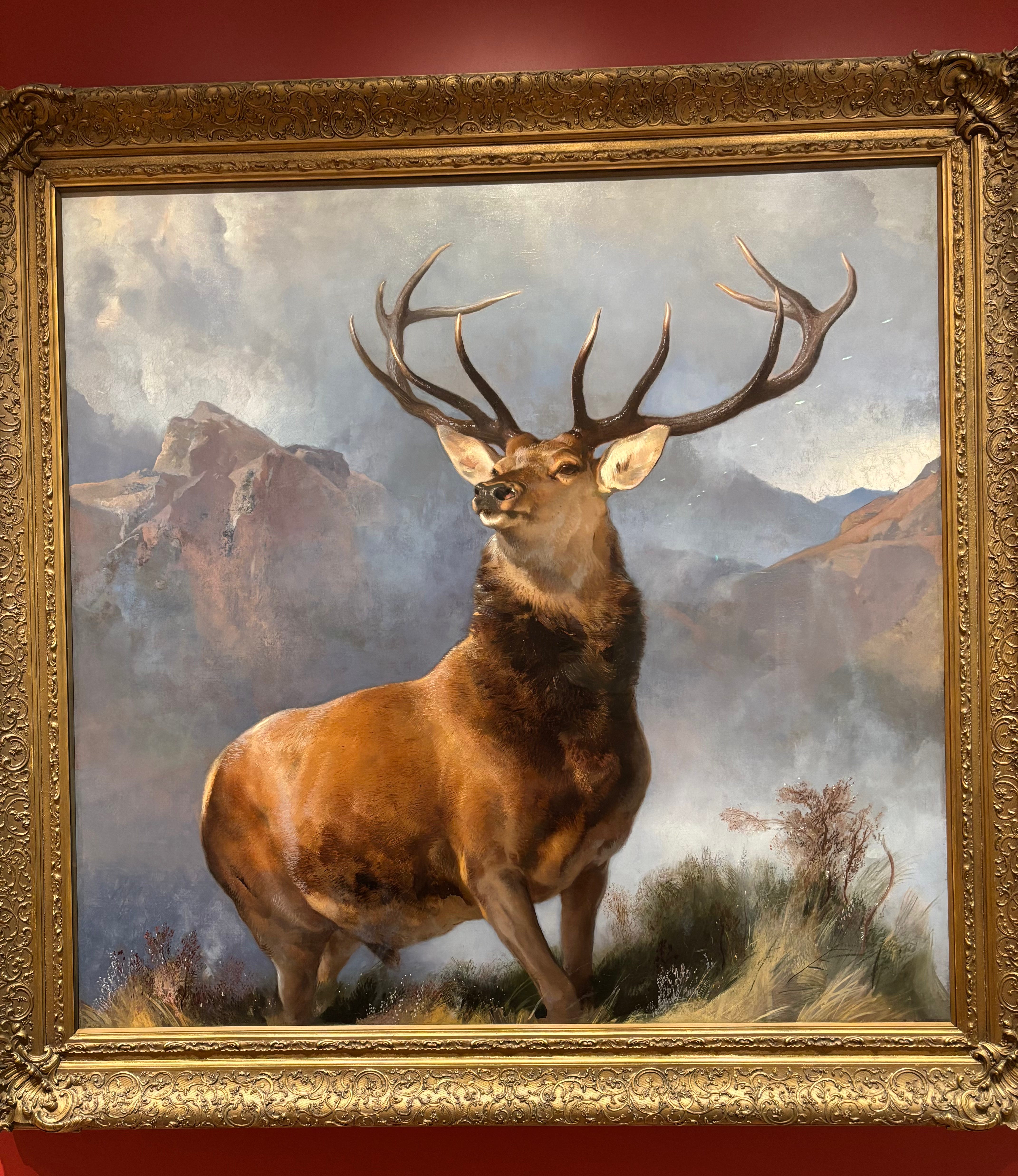
The scale of the painting. The stag standing against the landscape. The grass. The antlers. The hair. The detail around its face and nose.
Everything about it felt Scottish to me — the stag, the colours, the mist, the landscape, even the threatening sky.
Again I found myself moving closer.
How had somebody painted all of that with such extraordinary attention to detail?
Later I discovered that Edwin Landseer had spent years observing and drawing animals carefully. The detail I was admiring had grown out of trained attention practised over a lifetime. I also discovered that the National Galleries acquired The Monarch of the Glen in 2017 for £4 million, with public funds, grants, trusts, a public appeal and a part-gift all helping bring it into the national collection.
I had stood in front of a painting that had cost £4 million to acquire without having any idea.
And I had done it for free.
That still amazes me.
Somebody can walk in from Princes Street, stand in front of something valued at millions of pounds, move closer, study the brushwork and enjoy it.
No private invitation required.
It struck me again how much beauty and enjoyment can come to us as a gift — made possible by all the people and work behind the scenes that bring it within reach.
Then there was a sea-piece by Willem van de Velde the Elder from around 1650.
1650!
That number stopped me.
I was looking at something made more than 375 years ago, and I was amazed by how well it had been preserved.
Another gift.
It was completely different.
Almost no colour.
Ships. Masts. Ropes. Sails. Line after line of astonishing detail.
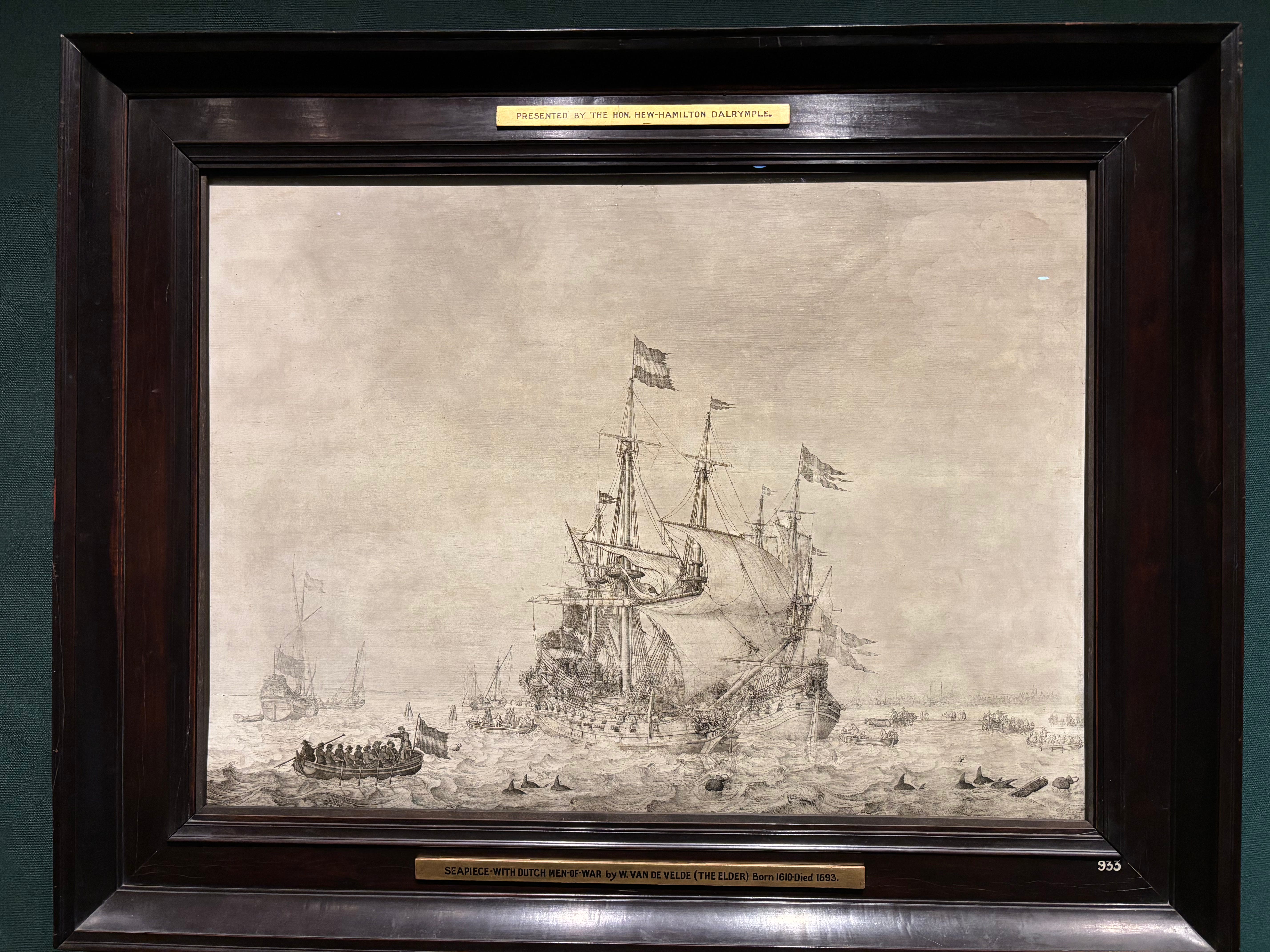
I stood looking at it partly because it seemed so unlike everything around it.
Later I learned that Van de Velde was the son of a sea captain, spent time with naval fleets and developed an extraordinary knowledge of ships through repeated experience and drawing. His mastery grew not through constantly moving on to something new, but through staying with one world long enough to know it deeply.
Then something else stopped me.
A sculpture.
George Anderson Lawson’s The Bard.
Until then, much of my amazement had been directed towards paint.
Now I was looking at clay.
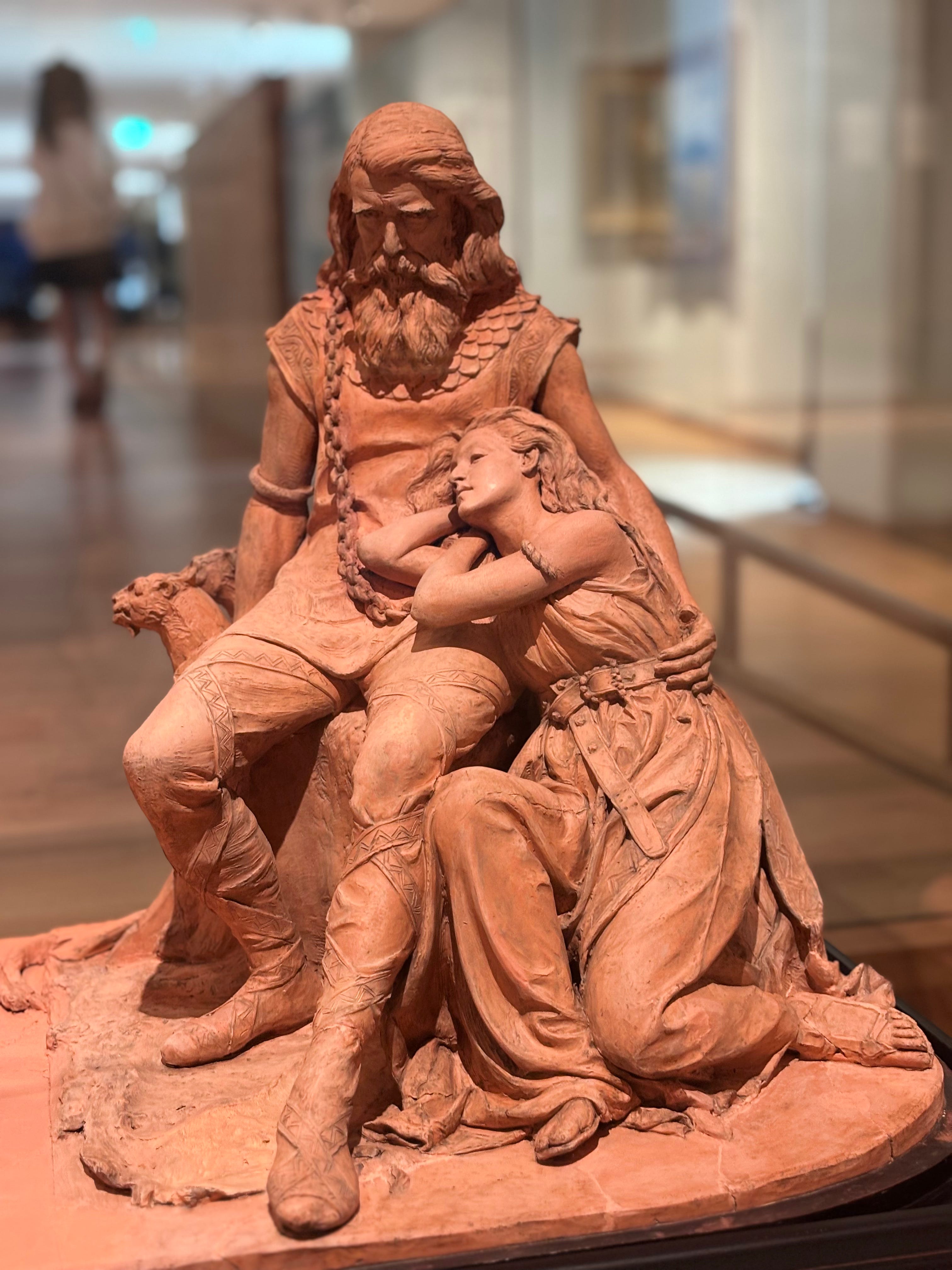
The hair.
The face.
The clothing.
The expression.
How could somebody shape all of that with their hands?
Later I discovered that the sculpture was terracotta — fired clay — and that the skill I was admiring had been developed through training, travel and years of practice.
The more I looked, the more the Gallery seemed to open.
Flowers that looked almost real.
Portraits with extraordinary faces.
Monet.
Van Gogh.
Marble.
Landscapes.
Scenes from history.
Some paintings I loved.
Some I appreciated without particularly wanting to stay with them.
Some pieces held my attention more than others.
That mattered too.
Taking my time did not make me like everything.
Attention did not remove taste.
But it gave me the chance to discover what was — and wasn’t — to my taste.
Eventually I looked at the time.
I had spent far longer than expected in the first Scottish corridor alone.
There was still a huge amount of the Gallery left.
And somewhere in my original plan there was supposed to be a museum.
I remember thinking:
I don’t want to rush this. I’m going to take my time and enjoy it.
I could have started moving faster.
Tick off the rooms.
Tick off the museum.
Get through the plan.
Instead, I went outside, bought some lunch, sat for a while, and then went back into the Gallery.
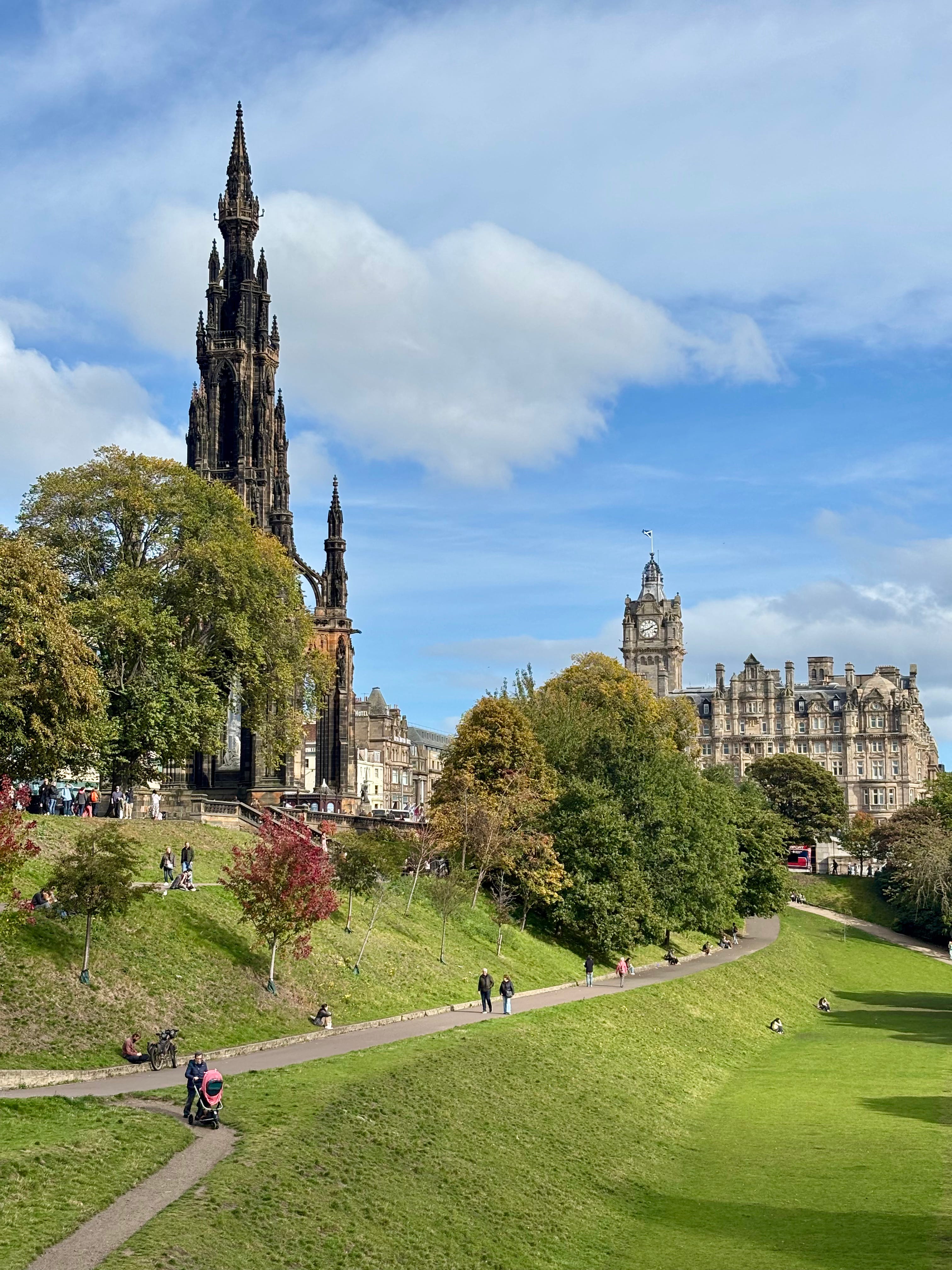
The museum disappeared from the plan.
I never even saw all of the Gallery.
And it did not concern me.
I was enjoying it too much.
By the time I left, the thing that surprised me most was very simple.
I loved it.
And almost immediately another question appeared.
Why had I thought I probably wouldn’t?
· · ·
As I thought about it afterwards, I realised that I had carried a quiet picture of myself.
Sport.
Walking.
Mountains.
The outdoors.
Scotland.
Photography.
Nature.
History.
Those things felt like me.
Somewhere outside that picture sat the art gallery.
Maybe there were art-gallery people and people who were not art-gallery people.
And without ever thinking very hard about it, I had probably put myself in the second group.
The strange thing was that I had formed that picture of myself on very little evidence.
Research later gave me a phrase for some of this: identity-based motivation.
The picture we carry of who we are can quietly shape the choices that feel natural to us.
People like me do things like this.
People like me don’t do things like that.
Those stories are not always wrong. Personality is real. Preferences are real.
But there is a problem when identity becomes the gatekeeper before experience has had the opportunity to speak.
I had already experienced something similar with jazz.
When Lynsey first suggested going to hear jazz, I was not particularly keen. I simply assumed it was not my thing. I did not picture myself as a jazz person.
Then I went.
And discovered that I loved certain kinds of jazz.
So much so that Lynsey and I later organised a Jazz Ball for the youth group we were leading.

The Gallery felt similar.
It had not taken something I disliked and somehow taught me to enjoy it.
It had given me a genuine experience of something I had hardly tested.
And that experience gave me new evidence about myself.
· · ·
The research into the Gallery itself produced another surprise.
The National Gallery opened in 1859, and from the beginning its purpose included ideas of enjoyment, learning and the “refinement of taste.” At its opening it was described as offering “refined and intellectual enjoyment” across the community.
I also loved discovering that it stayed open later on Wednesday and Saturday evenings so working people had the opportunity to see the national collection.
That reminded me of another Wonder Atlas journey I had taken.
That journey had led me back to Andrew Carnegie and Pittencrieff Park in Dunfermline. What had moved me most was not simply that Carnegie gave a park, but what he hoped that gift might do in the lives of ordinary people.
He wanted to bring more “sweetness and light” into the lives of Dunfermline’s working people, especially the young — “some charm, some happiness” — so that children growing up there might one day look back and feel that life had been made “happier and better.”
I had been one of those children.
The National Gallery is a different story. Carnegie’s philanthropy and the Gallery’s nineteenth-century civic purpose should not be confused.
But I could see a resemblance.
Beauty.
Learning.
Enjoyment.
Made available to ordinary people.
The possibility that what we encounter might enlarge our tastes and add fullness to our lives.
Different histories, but something of the same hope: that giving ordinary people access to beauty, enjoyment and learning can make life richer.
And I found myself thinking about that phrase:
refinement of taste.
We often speak as though our tastes are fixed.
That’s my taste.
That’s not my taste.
I like this.
I don’t like that.
But taste can be discovered.
It can also develop.
And sometimes we need a genuine encounter before we actually know.
That does not mean enough exposure will make everyone love everything.
It won’t.
But sometimes we may have reached a verdict before we have really given something a fair chance.
· · ·
As I thought about how a limited picture of ourselves can limit what we are willing to attempt or experience, I began to think about my Christian faith.
Jesus called ordinary people.
Fishermen.
A tax collector.
People who already had lives, trades, skills, habits and relationships.
They already had a picture of who they were and what they were capable of.
But Jesus was calling them into something larger.
He called fishermen to become “fishers of men” — taking a familiar picture and expanding it.
He was forming them into people who would teach, serve, lead, travel and do things they could hardly have imagined when they first left their boats and workplaces behind.
And He did not form them only by giving them information.
He taught them, and He gave them experience.
They watched Him.
Listened.
Asked questions.
Tried things.
Got things wrong.
Were corrected.
Served people.
Were sent out.
Returned.
Learned.
At one point, those He had sent out returned with joy at what they had experienced.
Through following Jesus, they were discovering not only more about Him, but also who He was forming them to become and what He was enabling them to do.
That left me thinking:
God does not form us only by changing what we think; He also forms us through what we live, practise and experience.
Scripture matters.
Prayer matters.
The Holy Spirit matters.
Teaching matters.
But following Jesus also involves actually following.
And that made me wonder whether there are some things about ourselves that we cannot completely discover from inside our own heads.
Sometimes we need experience.
There may be things we are capable of that we can only discover by trying.
There may be things we would enjoy that we can only discover by giving them a genuine chance.
And there may be possibilities we never encounter unless we are willing to try experiences that do not immediately fit the picture we already have of ourselves.
That does not mean endlessly reinventing ourselves.
It does not mean every boundary should be broken.
Some things genuinely are not for us.
Some invitations should be declined.
Some experiences confirm what we already knew.
I still love mountains.
Walking.
Photography.
Scotland.
The outdoors.
One enjoyable day in an art gallery did not replace any of that.
It simply made me a little less certain about the edges of the picture.
I realised that our picture can sometimes be too small.
My day at the Gallery also reminded me of a line in 1 Timothy about God “who richly provides us with everything for our enjoyment.”
I like that.
Enjoyment is not something I need to feel guilty about or justify by making it productive.
But there is also something good about simply enjoying what has been given.
And it made me think about all the different people whose gifts add enjoyment to the world.
Artists.
Musicians.
Comedians.
Chefs.
Authors.
Storytellers.
Gardeners.
Designers.
People who make, create, perform, cook, write and imagine things that other people get to enjoy.
I had spent an entire day enjoying what other people had made and shared with the world.
That enjoyment was a gift in itself.
· · ·
I am more careful now when I hear myself say:
That’s not me.
Sometimes it may be true.
But I am beginning to ask what evidence sits beneath it.
Maybe it isn’t:
That’s not me.
Maybe it is:
I don’t know if that’s me yet.
The Gallery has already changed something very ordinary.
I want to go back.
I want to visit art galleries across the world and see art from different cultures.
And I want to take my family.
I have a beautiful wife and five children, all with different interests.
Levi comes immediately to mind because most days he disappears into his room and draws. Comic-style characters. Action heroes. Whole worlds appearing on paper.
I would love to see what catches his eye.
Kate took art at school, and over the years she has produced pieces that have genuinely amazed and intrigued me — detailed drawings, portraits and landscapes, work I would never have thought to create myself.

And my other children have their own interests in art, music and creativity.
I have no idea what any of them would stop in front of.
Levi might walk straight past The Monarch of the Glen.
Kate might notice something I barely saw.
Someone else might decide that galleries really are not particularly their thing.
That would be all right too.
I do not want them to like what I liked.
I think I would simply like to open the door, give them time, and see what they notice.
Continue the Wonder
Every Wonder Essay begins with a simple observation.
Some readers are content simply to pause and wonder.
Others want to keep exploring.
If you’d like to follow this observation further, I’ve created a Research Companion exploring the questions beneath A Day at the Art Gallery — how personality and experience shape what we enjoy, how tastes can be discovered and developed, how the picture we carry of ourselves can limit what we are willing to try, and why access to art and beauty matters.
Continue exploring → Research Companion
Photo Journal — Coming Soon
I’m also preparing an A Day at the Art Gallery Photo Journal — a slower visual journey through Calton Hill, Edinburgh and the National Gallery, returning to the paintings, sculptures and small moments that caught my attention along the way.
This will follow shortly.
A note on process: This essay grew from a real lived observation and experience, recorded through the Wonder Atlas process. It was then developed in collaboration with ChatGPT through an iterative process of questions, responses, reflection, drafting and editing. I contributed the originating experience, photographs and reflections, answered questions throughout the process, shaped and reviewed the developing essay, and approved the final published text. I take responsibility for the final work.
Another wonderful piece of writing and reflection my friend....thank you so much. I am currently travelling and enjoyed this so much.
I have been to several museums etc. and always rush through with little enjoyment. I am going to give it another go for sure and take more time. It's fantastic you have found something 'new' to enjoy.
I look forward to your next piece of writing ❤️